
Critical Thinking is Not Enough


We are currently obsessed with the idea of "Critical Thinking." From primary school to corporate boardrooms, it is hailed as the ultimate antidote to misinformation. We are told that if we could just be more logical, more eloquent, and more rigorous in our analysis, our problems would vanish.
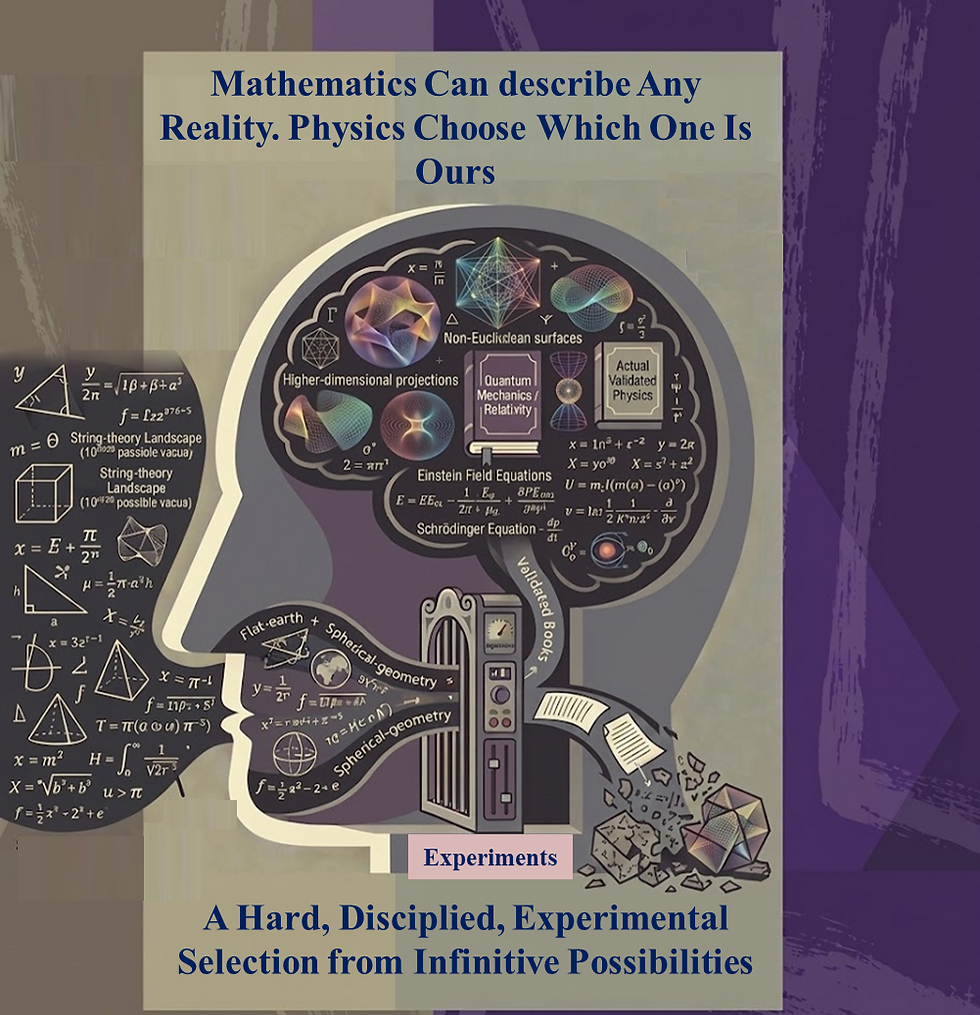
But there is a flaw in this obsession. As a society, we have become experts at the mechanics of thinking while losing our grip on the substance of reality. We have produced a generation of sophisticated thinkers who can construct breathtakingly rigorous narratives—internally consistent, logically coherent, and beautifully expressed—that describe worlds which simply do not exist.
The Trap of the "Rigorous Narrative"
Critical thinking, as it is traditionally taught, is a tool for internal consistency. It trains us to check for logical fallacies, to identify underlying assumptions, and to ensure that Point A leads to Point B. This training is necessary; it is the bedrock of intellectual discourse. However, it is fundamentally insufficient. The problem is that a narrative can be perfectly logical and entirely false. You can build a skyscraper of thought that is structurally sound from a mathematical perspective, but if it is built on a foundation of clouds, it is still an imaginary tower. We see this everywhere today. We see experts who use their high intelligence to "lawyer" reality. They create "rigorous" frameworks to justify a specific worldview, ensuring every cog in their machine turns perfectly against the next. To the observer, it looks like peak intelligence. It sounds like expertise. But it’s a closed loop—an exercise in sophistry, using the tools of reason to build a cage around a preferred belief.
Architects of Imaginary Worlds
When we rely solely on critical thinking, we become architects of imaginary worlds. In these worlds, our assumptions are never tested against the hard, stubborn edges of the physical universe; they are only tested against other thoughts. An expert critical thinker can argue a point so eloquently that the sheer beauty of the argument becomes a substitute for its truth. They can account for every variable and neutralize every counter-argument with logical precision. But if that narrative doesn't align with how the world actually functions—how humans behave, how biology works, or how economics play out in the street—it is nothing more than a high-level fantasy. This is the training we’ve prioritized: the ability to be "right" on paper while being catastrophically wrong in practice. We have prioritized the comfort of a cohesive story over the friction of a messy truth.
The Pivot: From Logic to Science.
If critical thinking is the tool we use to build the narrative, Scientific Thinking is the tool we use to see if the building stands up to a storm. The most important intellectual skill isn’t clear critical thinking. It’s clear critical thinking that can be proven wrong through experimentation. And iterate to a better outcome. This is the shift from the "thinker" to the "doer." This is scientific thinking. This is agile problem-solving. This is lean startup thinking. All of these are applications of rigorous scientific thinking that deliver lasting outcomes in the real world instead of the temporary comfort from an imagined world. Scientific thinking requires a certain intellectual humility that critical thinking often lacks. To think scientifically is to accept that your most "rigorous" and "eloquent" narrative might be total garbage when it hits the friction of reality. It involves the willingness to be proven wrong by data, by results, and by the "stubborn facts" of the environment.
A New Standard of Intellectual Value.
We need to change what we admire in our leaders and our experts. We have to stop rewarding people just for being "smart" or "eloquent." We have plenty of people who can write 50-page white papers that are logically flawless but practically useless. We need to start demanding Scientific Thinking. We need to value the person who tests to see if the theory holds in the real world. And when it doesn’t, says, "My theory was beautiful, but the experiment failed, so I am discarding the theory and iterating a new one which aligns with what I just discovered."We must prize this intellectual honesty over the person who tests only if the theory aligns with logic and received authority, and who shrugs off when someone points out that the world isn't behaving the way their theory says it should. The latter is not an expert; they are a storyteller who has mistaken their fiction for a manual.
The Way Forward: From Architects to Explorers
It is time to recognize that being a "sophisticated thinker" is a starting point, not a destination. We must stop being architects of imaginary worlds and start being explorers of the real one. Critical thinking is the map-making skill; it ensures the map is drawn clearly.
But Scientific Thinking is the act of actually walking the terrain to see if the mountain is where the map says it is. It is the process of discarding the map when you find a canyon that isn't on the page. In an age of sophisticated delusions, the most radical thing you can do is demand a result that actually works. Don't tell me why your world should work. Show me how it survives the experiment.


Comments